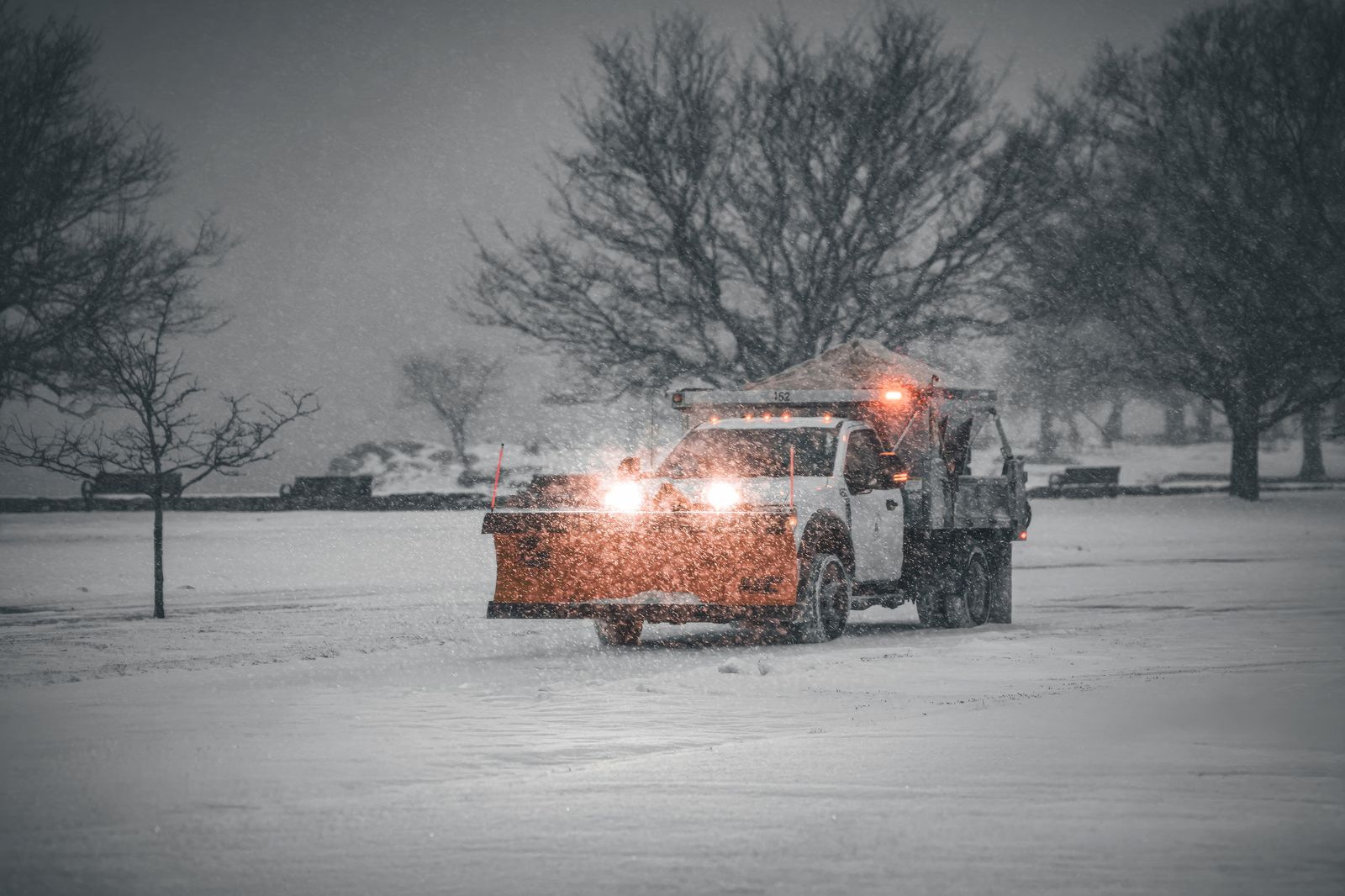
Commercial Snow & Ice Management in Buffalo, Niagara Falls & WNY
Seasonal plowing, salting and sidewalk clearing for commercial properties across Niagara County and Erie County — with a written trigger depth, a mapped stacking plan and 24/7 response through lake-effect events.
Winter here is an operations problem, not a weather problem
Western New York does not get one predictable snowfall pattern. It gets a long season punctuated by lake-effect bands that can bury one corridor while a property ten miles away stays clear. Planning for the seasonal average is how commercial sites end up unplowed on the days that actually matter.
The properties that come through winter cleanly are the ones with the boring fundamentals settled in advance: an agreed trigger depth, a known stacking plan, a documented sidewalk scope, and a contractor who dispatches without waiting for a call.
What we agree on before the first storm
- Trigger depth. The accumulation that automatically sends a truck, so nobody debates whether the storm "counted."
- Priority order. Which entrance, drive lane or loading area has to be open first for your operation to function.
- Stacking zones. Where piles go so they do not consume parking, block a sightline at the exit, or melt across the main walkway and refreeze.
- Sidewalk scope. Which walks, entries and access aisles are covered, and whether salting is included or applied on request.
- Site hazards. Curb lines, islands, irrigation heads, hydrants and low structures marked before the ground disappears.
Access is a liability issue, not a curb-appeal issue
A plowed lot with an untouched walkway is still a closed building for anyone using a mobility device — and it is the surface where slip incidents actually happen. We treat walkways, entries and ADA access aisles as core scope rather than an add-on, and we plan for the refreeze that follows a midday thaw.
The same contractor in July and January
Crews that maintain your grounds during the season already know where the curbs, beds and irrigation heads are. That familiarity is what keeps plow damage — and the spring repair bill that follows it — down.
Winter scope options
Lot plowing
Plowing to a mapped stacking plan so snow piles do not consume parking spaces or block sightlines at exits.
Salting & de-icing
Lot and walkway treatment applied to conditions — including refreeze passes after a thaw-and-drop cycle.
Sidewalk & entrance crews
Hand and machine clearing of walks, entries, ADA access aisles and dumpster approaches.
24/7 storm response
Continuous route work during extended lake-effect events rather than a single post-storm pass.
Snow relocation & hauling
Stack relocation or off-site hauling when piles begin to eat usable parking or block visibility.
Pre-season site prep
Marking hazards, curbs and hydrants, and confirming stacking zones before the first event.
Frequently asked questions
- What is a trigger depth and why does it matter?
- The trigger depth is the accumulation at which we automatically dispatch to your property without waiting for a phone call. Two inches is a common commercial trigger, but retail and medical sites often set it lower. Agreeing on it in writing before the season removes the argument about whether a given storm warranted a visit.
- Do you clear sidewalks and entrances, or only the lot?
- Both, when the scope includes it. Walkways, entrances, ADA access aisles and dumpster approaches are handled by sidewalk crews and can be scoped separately from plowing. For most commercial sites the walkway is the higher liability risk, so we recommend including it.
- How is commercial snow work billed?
- Typically either as a seasonal contract with a fixed monthly amount, or per push with separate salt pricing. Seasonal contracts make budgeting predictable in a region where storm counts swing widely. We will quote whichever structure your property prefers.
- What happens during a lake-effect event?
- Bands that sit over one part of the region can drop accumulation continuously for many hours. For those events we work the route in repeated passes rather than waiting for the storm to finish, so the lot never gets past the point where a plow can clear it cleanly.
- When should a contract be signed?
- Earlier is better. Routes are built around drive time and equipment capacity, so late-fall requests may be limited by what is already committed. Late summer through early fall is the practical window for a new Western New York commercial site.
Related TurnKey services
- Snow & Ice Planning GuideHow to structure a WNY commercial snow contract before winter.
- Winter Prep GuideGetting the building and site ready before the first freeze.
- Commercial Property MaintenanceYear-round contracts covering the whole property.
- Commercial Landscaping & GroundsGrowing-season grounds care for commercial sites.

Ready to lock in a turnkey solution?
Get a free, no-pressure estimate from a real local contractor — usually within 24 hours.
Responses typically within 24 hours
Bigger project? Check your financing rate with Acorn Finance — checking your rate won't impact your credit score.